Opportunity Statement: Coolidge Elementary will continue to provide all students with academic, social, and emotional growth opportunities through great teaching and the utilization of our community resources. We will maintain high expectations for all students, as well as expand our efforts to cultivate a positive school culture that encourages intellectual and social growth.”
Coolidge Vision and Mission
Our Mission: “Educate students for lifelong learning and responsible living.”
Our Vision: “Provide a learning environment that promotes and develops academic and
social growth.”

Mr. Scott's PreK class to lead Rise N Shine.


According to the article, what is the key to relationships with students and timely, differentiated instruction and support? Do you agree or disagree? WHY?
Where do I find?.........

- Mon. March 4 - Tornado Drill, Brett out P.M. Principal Panel Mid-America University, Board Meeting 5:30.
- Tues. PLC Meetings, March 5 - Mandatory 1 hour faculty meeting - State Testing Training.
- Wed. March 6 - Regular Day (weather permitting! :))
- Thurs. March 7 - Math Night 5:30 - 7:00
- Fri. March 8 - Unit 7 Benchmark Test, Sp Ed Field Trip. Awards for Self-Direction for students.
Mr. Scott's PreK class to lead Rise N Shine.
Read Across America Week March 4 - 8
- Mon - The Sleep Book. Wear your appropriate pajamas or sweatpants.
- Tue - Oh the Places You'll Go - wear a college t-shirt
- Wed - Today is the Day Dress as your favorite Dr. Seuss character
- Thur - Thunder Thursday - wear OKC Thunder gear
- Fri - My Many Colored Days wear the shirt color for your grade:
- PreK: Green, Kinder: purple, 1st: yellow, 2nd: pink, 3rd: blue, 4th: red, 5th: black, 6th: orange

Have you logged into Lexia to check if your student needs an intervention? Remember Lexia is a tool not the teacher.
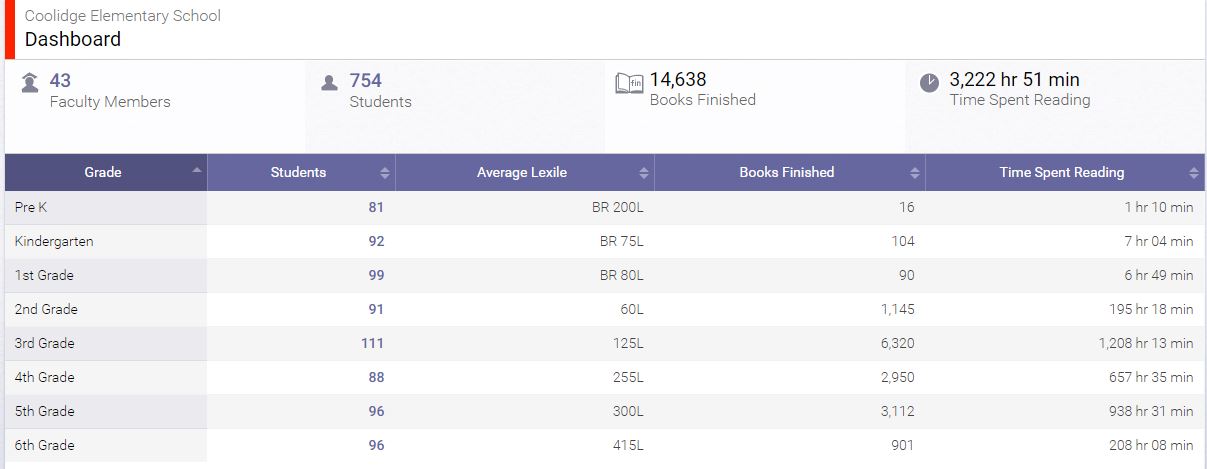
Shout Out to 3rd Grade! They have spent 1,208 hours reading on MyOn. They are followed closely by 5th grade with 938 hours. How many quizzes have your students taken?

3 Steps to Elevate Conferring
Lori Sabo
Issue #555
We have the opportunity to visit and work in classrooms all over. One of our favorite things is to hunker down next to a child and confer. It brings us great joy when we ask, “What are you working on as a reader?” and they answer in succinct and specific detail. Suddenly the approaching conference is brought into focus and we know what to look for and how to elevate the work that is about to take place.
How does it happen? How is it that students as young as five are able to unabashedly share something beyond “I want to read chapter books” or “I want to move up a level”?
Here’s how it happens, and here’s how our actions become intentional and purposeful, and help accelerate readers’ growth.
- We give a good diagnostic assessment that helps us discern strengths and areas of need. Then we select one or two things to begin with. We share them with the student and record them in a paper or onlineconferring notebook.
- The student posts their name under the corresponding CAFE Menu heading. We may also supply a bookmark, promise, or strategy cardreminder they can keep in their book box or on their desk to help them remember what they are working on.
- This goal becomes the primary focus of every conference until the student displays mastery and we can layer on a new strategy or skill, or they aren’t progressing and we need to shift our instruction. This focus becomes even more powerful when it is supported in every interaction: with the teacher, instructional assistant, special ed teacher, or literacy coach. It is the beauty of curricular coherence in action and one of the surest ways to speed growth.
If we were to drop by your room today and sit next to any child with a book, would they be able to tell us what they are working on as a reader? If not, let them participate in the process.
Gail recently invited a class of fifth graders to look at the CAFE Menu, determine which of the headings would most help them grow as readers, and be ready to share when she joined them for a brief conference. If they had difficulty decoding multisyllabic words, they asked her to help them with accuracy. If they didn’t know what words meant, they asked for some strategy suggestions that would help them expand their vocabularies. And if they found it difficult to move beyond the words to thinking about inferences, theme, and author’s purpose, they asked her to help with comprehension. This brought the work that followed into focus for Gail, the student, and the classroom teacher moving forward.
Carl Anderson once said, “Conferring is not the icing on the cake; it is the cake.” We couldn’t agree more. Frequent, positive, focused interactions with students are the key to relationships as well as timely, differentiated instruction and support.

According to the article, what is the key to relationships with students and timely, differentiated instruction and support? Do you agree or disagree? WHY?
Where do I find?.........
Kindergarten | 1st Grade | 2nd Grade | 3rd Grade | 4th Grade | 5th Grade | 6th Grade |
| Bundled Standards Year at a Glance First 20 Days | Bundled Standards Year at a Glance First 20 Days | Bundled Standards Year at a Glance First 20 Days | Bundled Standards Year at a Glance First 20 Days | Bundled Standards Year at a Glance First 20 Days | Bundled Standards Year at a Glance First 20 Days | Bundled Standards Year at a Glance First 20 Days |
OKCPS ELA Standards by Grade Level
|
OKCPS and OAS Crosswalk
|
OKCPS ELA Bundles
|
|---|---|---|
6th Grade Bundles
|
OKCPS Math by Grade Level
|
OKCPS-OAS Crosswalks
|
OKCPS Standards by Bundles
|
|---|---|---|
Pre-Kindergarten Bundles
| ||
Kindergarten Bundles
| ||
Elementary ELA Year- at- a- Glance
| |
|---|---|
OAS for Social Studies Bundles
|
OKCPS Social Studies Unit Plans
|
|---|---|
1st Grade American Heroes
| |
OAS Science Standards by Bundle
|
OKCPS Science Unit Plans
(Please note: You will need your OKCPS log-in to access)
|
|---|---|


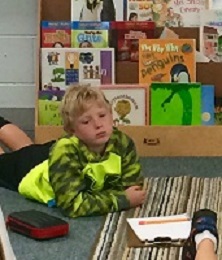 Teachers often wonder if the five Daily 5 tasks can truly engage students each and every day, year after year. "Won't they get bored?" The answer to this is no, and here is why: